Is your James Island home smelling musty or showing cupped floors after a sticky summer? You are not alone. Our coastal climate keeps humidity high, and crawlspaces soak it up fast. In this guide, you will learn fixes that actually work in 29412, what local codes expect, realistic costs, and how to keep moisture under control for good. Let’s dive in.
Why crawlspace humidity is a 29412 issue
James Island sits in a hot, humid coastal zone where summer relative humidity often runs in the mid 70s. That outdoor moisture easily finds its way under your home. Long‑term climate data confirms high average humidity through the year.
Local flood risk and a generally high water table add to the challenge. Before you make changes under your house, review your property’s flood status using Charleston County’s floodplain mapping resources.
Termites also thrive in moisture. Charleston County has documented Formosan and other subterranean termite activity, so keeping wood dry in your crawlspace is essential. Clemson Extension details the local pressure in its overview of Formosan termite distribution in South Carolina.
Start outside: stop water first
Grade, gutters, and downspouts
Make sure soil slopes away from your foundation and that downspouts discharge well away from the house. This reduces water that can seep into the crawlspace. The EPA’s moisture guide lists site drainage as a first step.
Fix leaks and clear debris
Repair plumbing or roof leaks and remove organic debris under the house. Standing water and wet materials will defeat any crawlspace upgrade.
Encapsulation basics that work here
Install a continuous ground vapor barrier
For unvented or conditioned crawlspaces, South Carolina allows encapsulation when you install a continuous vapor retarder with sealed seams and edges up the wall. The state references an ASTM E1745 Class A vapor retarder and outlines sealing requirements in its unvented crawlspace code section.
Choose durable material
While thin plastic can meet minimums, many coastal projects use thicker barriers for durability in a space that gets occasional traffic. Heavier options, such as 10 to 12 mil, resist punctures better than 6 mil, as explained in this comparison of vapor barrier thickness.
Address groundwater before sealing
If you see pooling water, plan for drainage matting or a sump system before you encapsulate. Encapsulation over active seepage will fail.
Seal and condition vs vent
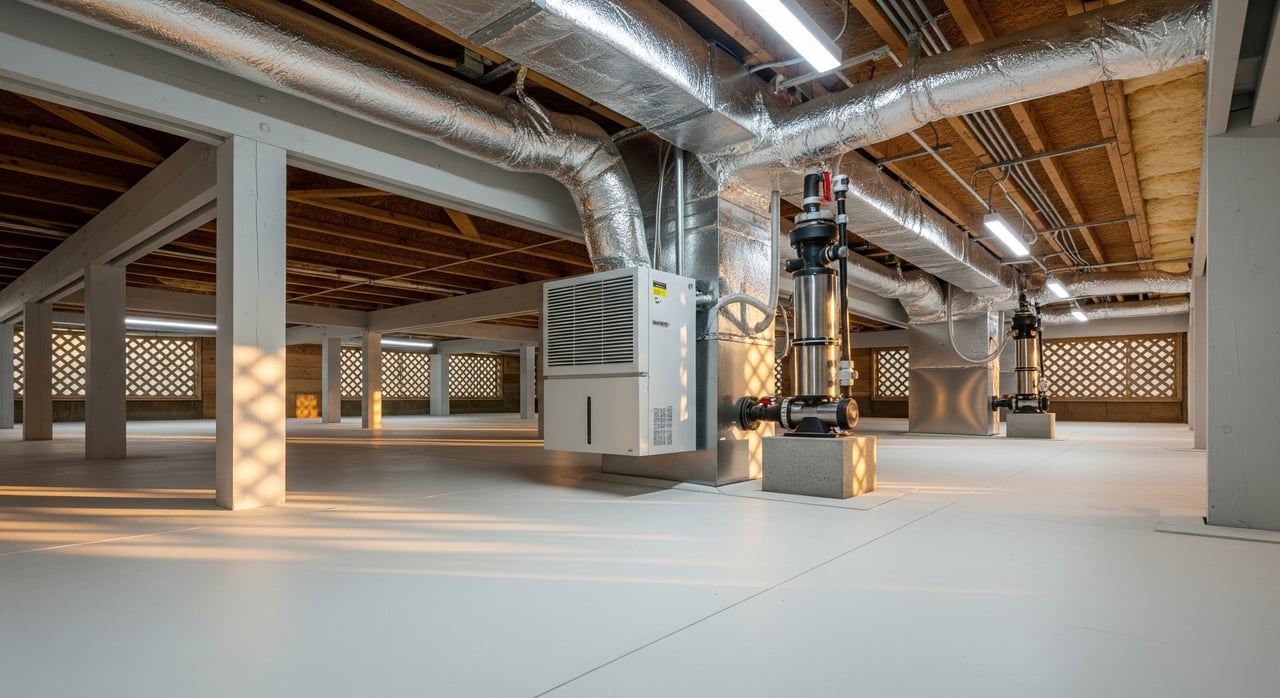
Modern building science favors a sealed, conditioned crawlspace in hot, humid climates like James Island. Encapsulation with mechanical moisture control is typically more effective than passive venting here. See Building Science Corporation’s guidance on crawlspace insulation and conditioning.
Control humidity with a dehumidifier or conditioned air
Aim to keep relative humidity below 60 percent to help limit mold. Many pros target about 45 to 55 percent in humid summers for a practical balance. The EPA recommends keeping indoor RH under 60 percent.
Choose a crawlspace dehumidifier sized for your space and conditions. ENERGY STAR offers capacity guidance and efficiency tips for selecting dehumidifiers. Place the unit where air can circulate, and drain it by gravity or pump to a proper discharge point.
Insulation, air sealing, and termite considerations
When you condition the crawlspace, insulate the perimeter walls instead of between floor joists and air seal the space so it tracks the home. The Building Science guidance above covers why this approach works.
Seal rim joists and penetrations carefully. Where you use foam plastics, South Carolina requires a visible inspection gap in areas with heavy termite activity. Review the state provisions on foam plastic and termite inspection gaps and keep up routine termite inspections.
Costs, permits, and floodplain checks in 29412
Project pricing varies with size and condition. Typical professional encapsulation ranges run about 2 to 8 dollars per square foot, or roughly 3,000 to 10,000 dollars or more for full projects with repairs. See ballpark figures summarized by HomeAdvisor.
Crawlspace‑rated dehumidifiers range from a few hundred dollars to 2,000 dollars or more depending on capacity and features. ENERGY STAR details efficiency considerations for dehumidifier selection.
Before major work, check whether you need permits or floodplain approvals. Properties in FEMA Special Flood Hazard Areas may have additional requirements. Start with Charleston County’s floodplain resources and verify local permitting.
Monitoring and maintenance that keep results
- Place a hygrometer in the crawlspace and check readings seasonally. Keep RH under 60 percent, with 45 to 55 percent as a practical target in our summers. Reference the EPA’s humidity guidance.
- Do quarterly visual checks for pooled water, condensation, loose seams, and signs of termites or wood damage. The EPA’s mold course outlines what to watch for during basic inspections.
- Clean dehumidifier filters and confirm the drain works before peak summer. ENERGY STAR provides care tips for efficient operation.
- Schedule a yearly crawlspace and termite inspection with a qualified professional. Clemson’s guide explains subterranean termite control basics.
A simple action plan
- Inspect and measure humidity. 2) Fix grading, gutters, and leaks. 3) Remove wet debris and address any standing water. 4) Install a continuous, sealed vapor barrier and plan wall insulation if conditioning the space. 5) Add a properly sized dehumidifier and verify drainage. 6) Seal rim joists, leave termite inspection gaps where required, and schedule routine inspections. 7) Monitor RH and maintain equipment.
If you are weighing crawlspace upgrades before selling or after buying on James Island, you do not have to guess. For local guidance tailored to your home, reach out to Cara Schaafsma.
FAQs
What crawlspace humidity level should I aim for in a James Island home?
- Keep it below 60 percent to limit mold, with 45 to 55 percent as a practical target in our humid summers, based on EPA guidance.
Is venting better than sealing for 29412 crawlspaces?
- In hot, humid climates like James Island, sealed and conditioned crawlspaces usually perform better than passively vented ones when built to code and flood considerations are addressed.
Do I need a thick vapor barrier or is 6 mil enough?
- Minimums may allow thin plastic, but thicker barriers, such as 10 to 12 mil, hold up better in coastal crawlspaces; follow South Carolina’s unvented crawlspace requirements for a Class A vapor retarder and sealed seams.
Will encapsulation stop termites in Charleston County?
- Encapsulation reduces moisture that attracts termites, but it does not remove risk; plan for inspection gaps where required and maintain regular professional termite inspections.
Do I need a permit to encapsulate my crawlspace on James Island?
- Many projects are permitted, and homes in FEMA flood zones may have extra steps; check Charleston County’s floodplain resources and confirm local permit requirements before you start.